
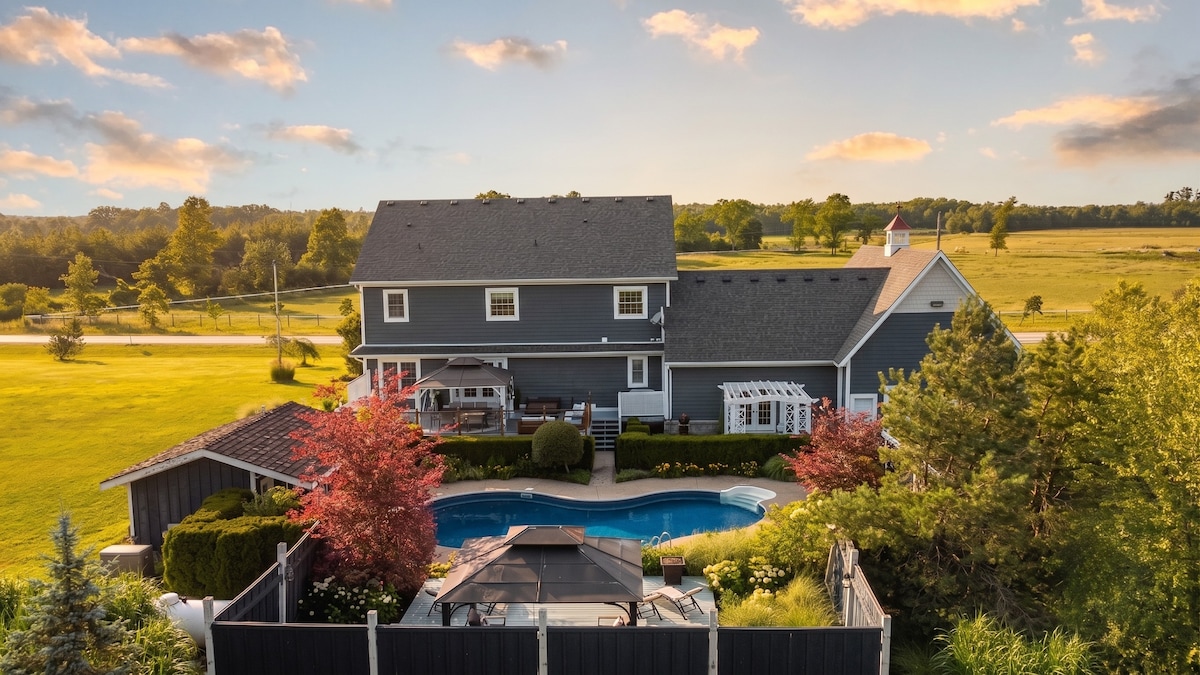
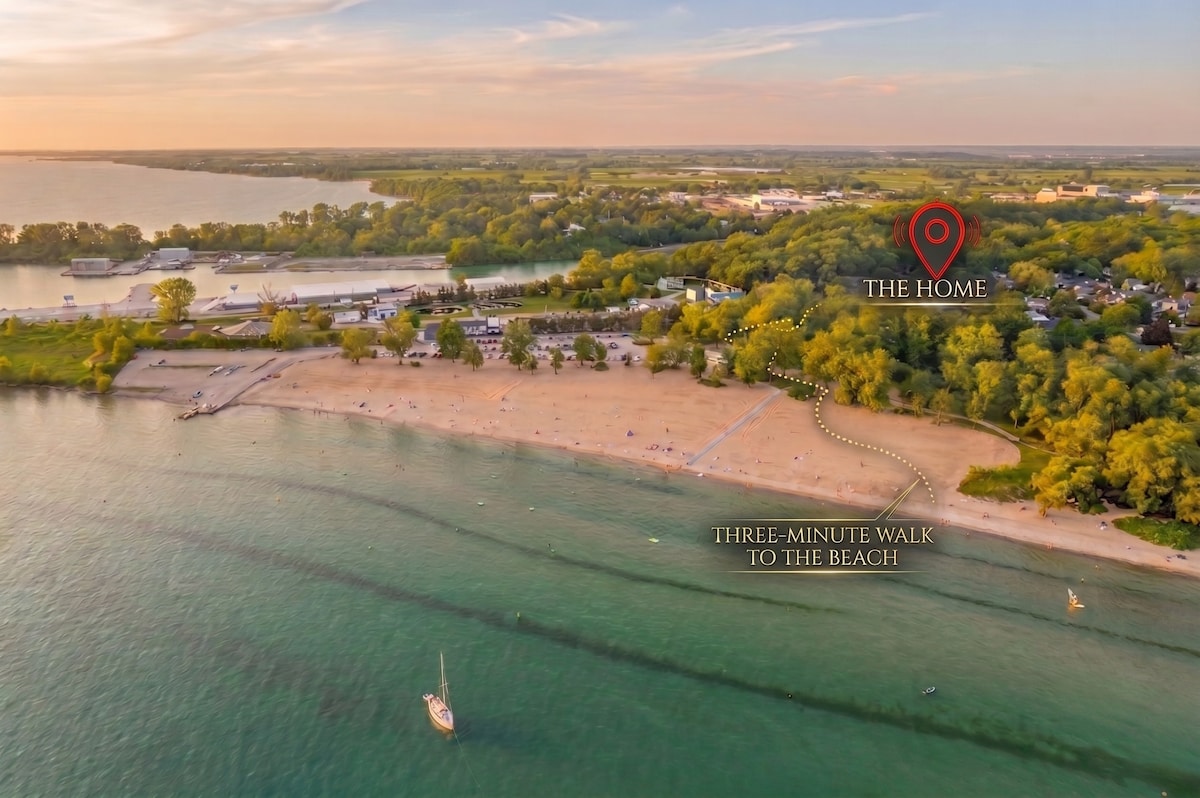
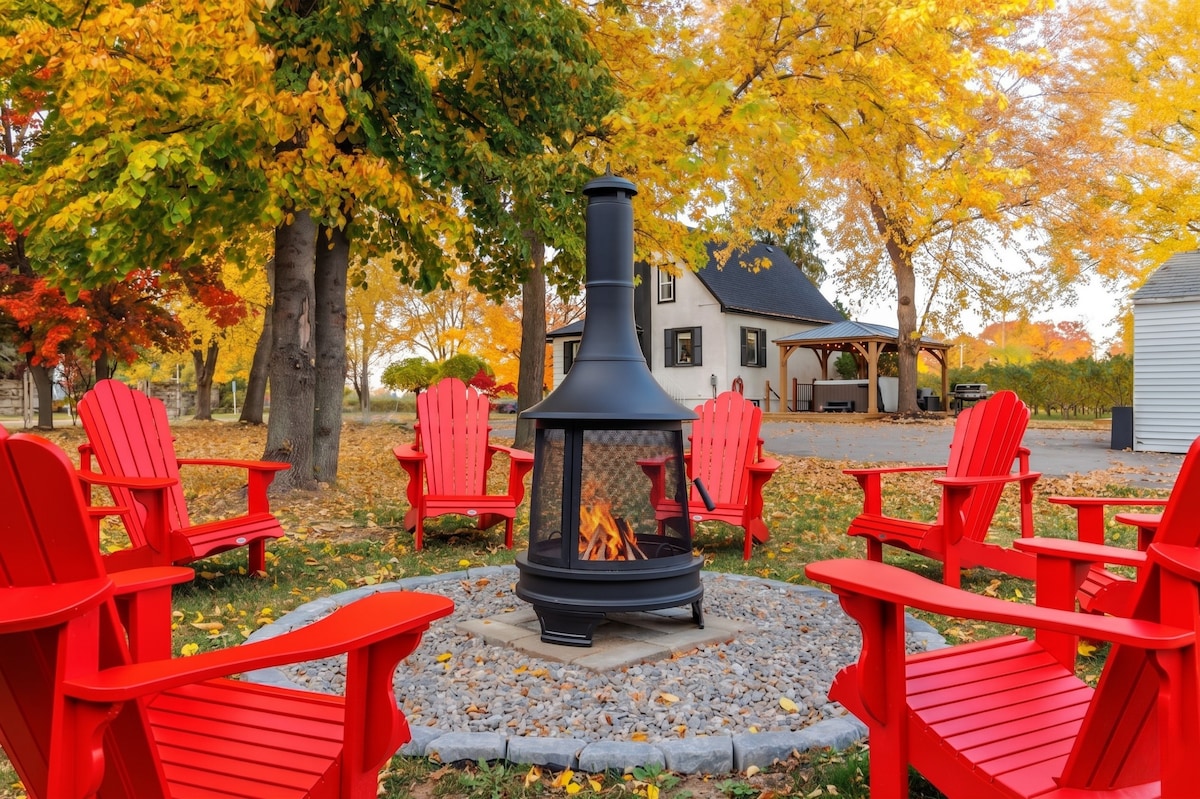
Niagara-on-the-Lake, Ontario
Orchard House | Peach Orchard Views | Hot Tub
Personally owned and managed by us
4.89 (178 reviews)
View listingWhy this market
The City describes Vaughan Metropolitan Centre as its downtown core, with residences, offices, public spaces, shops, restaurants, and transit connections. Elsewhere, the City maintains more than 60 kilometres of trails for walking, riding, and rolling. The William Granger Greenway Nature Walk links parkland with a side trail toward the McMichael Canadian Art Collection and Kleinburg’s historic main street. These contexts do not make every home or guest itinerary the same.
Canada’s Wonderland is another recognizable Vaughan attraction. Destination Ontario describes it as Canada’s largest theme park and notes an operating calendar that generally runs from early May into early September, with weekend operation typically continuing through October. That supports an attraction calendar and family-oriented travel as one possible visitor context. It does not establish a citywide high season, demand level, or outcome for an individual listing. We use local context to ask better questions about the home rather than to make performance assumptions.
For us, the practical work begins with how a guest will actually use the space. Sleeping arrangements, parking and arrival instructions, outdoor areas, household systems, accessibility considerations, and the information a group needs before booking all deserve attention. A polished listing is helpful, but it should be an accurate expression of a home that is ready to receive guests. We build the operating discussion around those details, the owner’s goals, and the standards that can be maintained consistently between stays.
Local rules
The City of Vaughan states that a short-term rental is a dwelling unit, or part of one, offered for no more than 29 consecutive days. The City permits this use only in the homeowner’s or tenant/lessee’s principal residence and requires a City licence. Its current information says that both short-term-rental owners and brokerages require licences. A proposed property must not be treated as eligible simply because it is residential or because an operating plan is being considered.
The City’s materials also describe ongoing operating requirements. The unit must comply with the Ontario Building Code and Ontario Fire Code, including maximum occupancy; the issued licence must be displayed at or near the main entrance; and an emergency contact must be available 24 hours a day, seven days a week while the rental operates. The City says its Municipal Accommodation Tax is four per cent of accommodation cost and that owners and brokerages collecting payment on behalf of owners must charge and remit it. Licence renewal occurs on the annual anniversary, so owners should keep the timing and status of their City records in view.
Eligibility remains specific to the property and the current municipal framework. The City’s consolidated by-law warns that recent amendments may not yet appear in the consolidation, and the City’s live pages include updated process information. Before listing, we encourage an owner to confirm current requirements directly with the City of Vaughan, including principal-residence evidence, residential-use permission, building or condominium permissions where relevant, tenant permission where relevant, safety and occupancy conditions, licence status, renewal, and the current MAT process. We do not determine compliance or infer address-level eligibility.
Review the City of Vaughan’s short-term rental guidanceWhat we handle
Our work makes the guest journey and ownership process easier to follow. Scope depends on the home’s condition, existing systems, the owner’s role, and applicable municipal requirements.
We focus on clear information, reliable coordination, and decisions grounded in the property.
Co-hosting explained
Co-hosting is a collaborative operating arrangement, not a substitute for property-specific review. An owner may remain closely involved in decisions while we support listing operations, guest communication, coordination, and the recurring systems around a stay. Before describing a scope, we want to understand what the owner already manages, what needs attention, and which responsibilities require a defined handoff.
For a Vaughan property, that conversation should sit alongside the City’s current rules rather than after them. A licensed owner remains responsible for the by-law-governed decisions and actions described by the City, and the City requires operators to be registered. We can help owners organize an operating conversation, but we do not replace the City’s review or make eligibility determinations. Clear roles, accurate property information, and a plan for guest support are the foundation of a workable co-hosting relationship.
The goal is not to force every owner into the same model. Some discussions begin with a full operating review; others focus on a limited set of systems that need structure. In either case, we look for a practical plan that respects the home, gives guests dependable information, and leaves the owner with visibility into how the property is being cared for.
Nearby homes
These homes use each property’s recorded town. They are examples from other Ontario locations and show the presentation and care that inform conversations with prospective owners.
Local questions
We consider each Vaughan inquiry individually, starting with the property, owner’s objectives, setup, and applicable City requirements before discussing scope.
We cannot make that determination. Vaughan’s materials say short-term rentals are permitted only in a homeowner’s or tenant/lessee’s principal residence with the required City licence. Owners should confirm the current rules and their property-specific circumstances directly with the City before listing.
The City identifies a principal-residence condition, a licence, and compliance with building and fire requirements, including maximum occupancy. Its materials also address documentation, licence display, emergency contact availability, and renewal. Confirm the current application requirements with the City for the particular property.
The City says a four per cent Municipal Accommodation Tax applies to short-term-rental stays and describes collection and remittance obligations for owners and brokerages that collect payment on an owner’s behalf. Verify the current workflow directly with Vaughan before operating.
Owner inquiry
Tell us about the home, its current setup, the kind of support you are considering, and any questions you have about the operating process. We will review the conversation property by property and begin with the information needed to assess a sensible next step, including the need to verify current Vaughan requirements with the City.
Regional context
Niagara is our home base, and we also consider select management and investment opportunities elsewhere. Our Niagara hub explains the local markets we currently focus on in Ontario.