
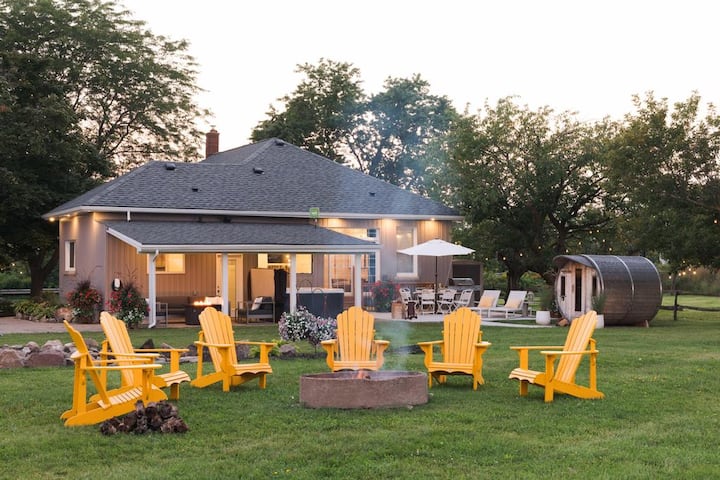

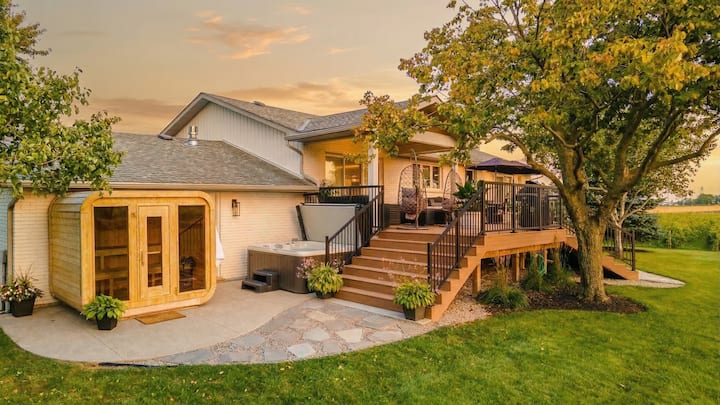
St. Catharines, Canada
Vineyard Sunset House | Views | Hot Tub | Sauna
Views · Hot Tub · Sauna
4.95 (151 reviews)
View listingWhy this market
The City identifies Port Dalhousie’s historic commercial core as Lakeport Road, Lock Street, and Hogan’s Alley, and links the community’s nineteenth-century growth to the Welland canals and Great Lakes shipping. That setting can inform a local orientation for guests, but it does not establish the features, access, or suitability of any individual home. Guest-facing details should remain tied to what has been verified for the property.
The City’s Lakeside Park Carousel is a documented local landmark: a Charles I.D. Looff original, hand-carved from 1898 to 1905, with 68 animals. The schedule includes late-spring through early-fall dates, subject to change. This is useful context for an accurate welcome guide, not a claim about demand, bookings, or what a particular stay will be like.
Public-access information deserves the same care. The City identifies parking at Lakeside Park and nearby City lots, with paid visitor parking at Lakeside Park from May 1 to September 30, 9 a.m. to 9 p.m., at $3 per hour with a three-hour limit. A home should not promise public parking or availability; guests can be directed to current City guidance.
Local rules
Port Dalhousie is not a separate municipality, so the City of St. Catharines is the first-stop authority for short-term-rental licensing and zoning. The City says short-term rental accommodation is permitted in residential areas only when it is secondary to a full-time residence and is the primary residence of the operator. It is a home-based business, an entire dwelling unit may be rented for no more than 28 consecutive days, and one parking space is required per bedroom. On-street spaces cannot be counted. The research did not identify a categorical City prohibition or an unresolved City-wide rule for Port Dalhousie; this is not a determination for a particular address.
A City licence is required before operating. The City lists application materials that include site and floor plans, a parking-management plan, fire protocol, proof of insurance, an electrical-safety certificate, ownership or lease evidence, and interior and exterior photos. It also requires at least $2 million per occurrence in general-liability insurance, subject to the application wording. Tenant-operated accommodation requires the lease and written owner authorization. Advertising or promoting without a valid licence number may lead to City penalties. These requirements should be checked against the current City process before any advertising or operation.
The City’s dedicated Municipal Accommodation Tax page states that a 4% MAT applies per night of transient accommodation for 30 days or less, and that providers must list it separately, register, and remit collected amounts monthly. Its short-term-rental page still refers to 2%, so the rate and procedure should be confirmed in writing with City Finance before tax display or remittance. Zoning must also be confirmed for the exact civic address; the City offers a Zoning Verification letter. Within the Port Dalhousie Heritage District, an owner may need a heritage permit before construction or renovation. Condominium rules, lease terms, insurance, code obligations, and tax treatment are separate matters not resolved here.
City of St. Catharines: Short-term Rental LicensingWhat we handle
After the owner has pursued the confirmations that apply to the property, we can discuss a practical hospitality scope. The work starts with an understanding of the home and the owner’s preferred role, rather than a destination promise.
The aim is an orderly process with accurate information for guests and decisions connected to the home’s condition.
Co-hosting explained
Co-hosting can support agreed guest-facing and property-operating work while leaving owners with the decisions they wish to retain. Possible responsibilities include listing administration, guest communication, turnover coordination, property checks, maintenance follow-up, and reporting. The useful first step is documenting who is responsible for each item before guests depend on it.
The appropriate scope depends on the home’s setup, access, service needs, operating systems, and the owner’s desired involvement. A discussion can distinguish between launch planning, ongoing coordination, and more limited support. It creates a chance to identify information that still needs to be confirmed before it appears in guest materials.
For a Port Dalhousie inquiry, hospitality planning does not replace municipal or property-specific review. Zoning, primary-residence status, on-site parking, licence requirements, heritage considerations, and tax administration must be addressed with the appropriate authorities. Once those questions are being handled, the operating conversation can focus on accurate communication, readiness between stays, and a workable coordination rhythm.
Nearby homes
These cards preserve the current names and St. Catharines locations in the property data. They are portfolio references without travel-time claims and do not answer rule questions for another address.
Local questions
No. Port Dalhousie is a community within the City of St. Catharines. The City is the appropriate first-stop authority for local short-term-rental licensing, zoning, by-law enforcement, municipal accommodation tax, and City parks and parking information.
The City says the use must be secondary to a full-time residence and the operator’s primary residence. It describes the use as a home-based business, limits an entire-unit rental to 28 consecutive days, requires one on-site parking space per bedroom, and requires a City licence before operation.
The City’s dedicated MAT page states a 4% tax for transient accommodation of 30 days or less, separately shown and remitted under its process. Because the short-term-rental page still refers to 2%, obtain written confirmation from City Finance before setting up tax collection, invoices, or remittances.
Start with the exact civic address: current zoning, primary-residence and secondary-use conditions, on-site parking, the City licence process, safety documentation, and heritage-district status. Also confirm condominium or lease restrictions, insurance, code obligations, and tax treatment that may apply to the arrangement.
Owner inquiry
Tell us about the property, its setup, and the support you are considering. An early conversation covers the home’s verified details, owner goals, access, service needs, and the questions that still need City or professional confirmation. From there, we can consider whether an operating scope and division of responsibilities make sense.
Regional context
Niagara is our home base, and we also consider select management and investment opportunities elsewhere. Our Niagara hub explains the local markets we currently focus on in Ontario.