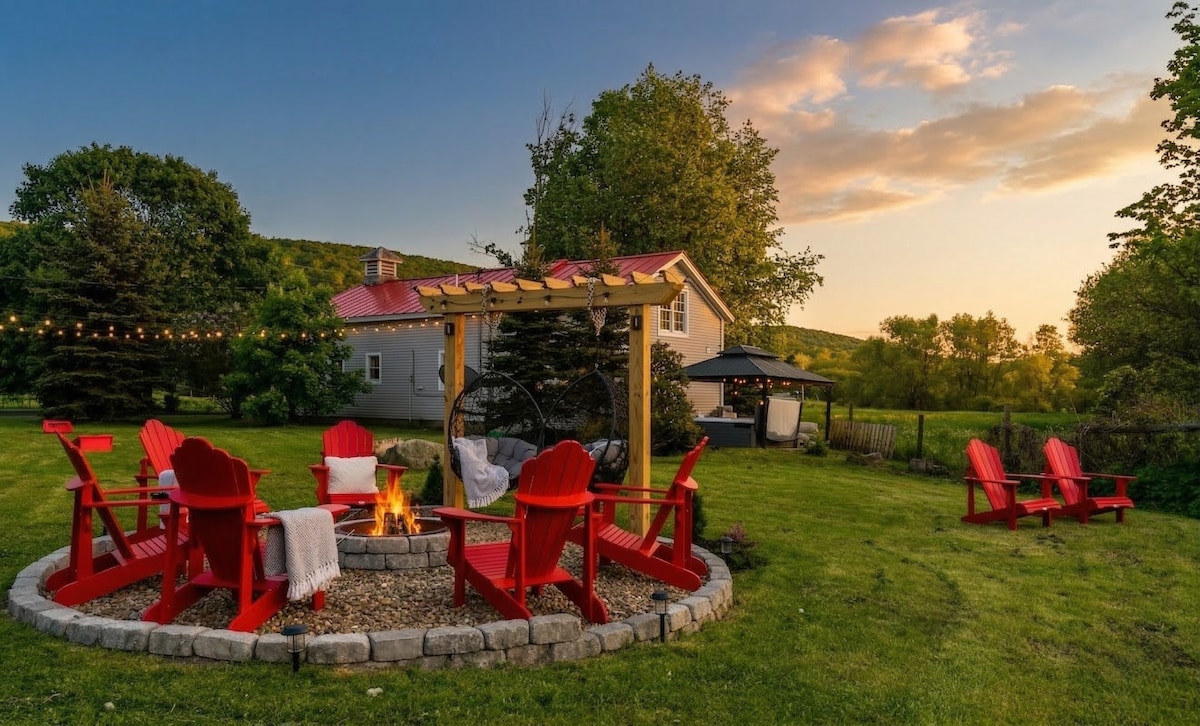
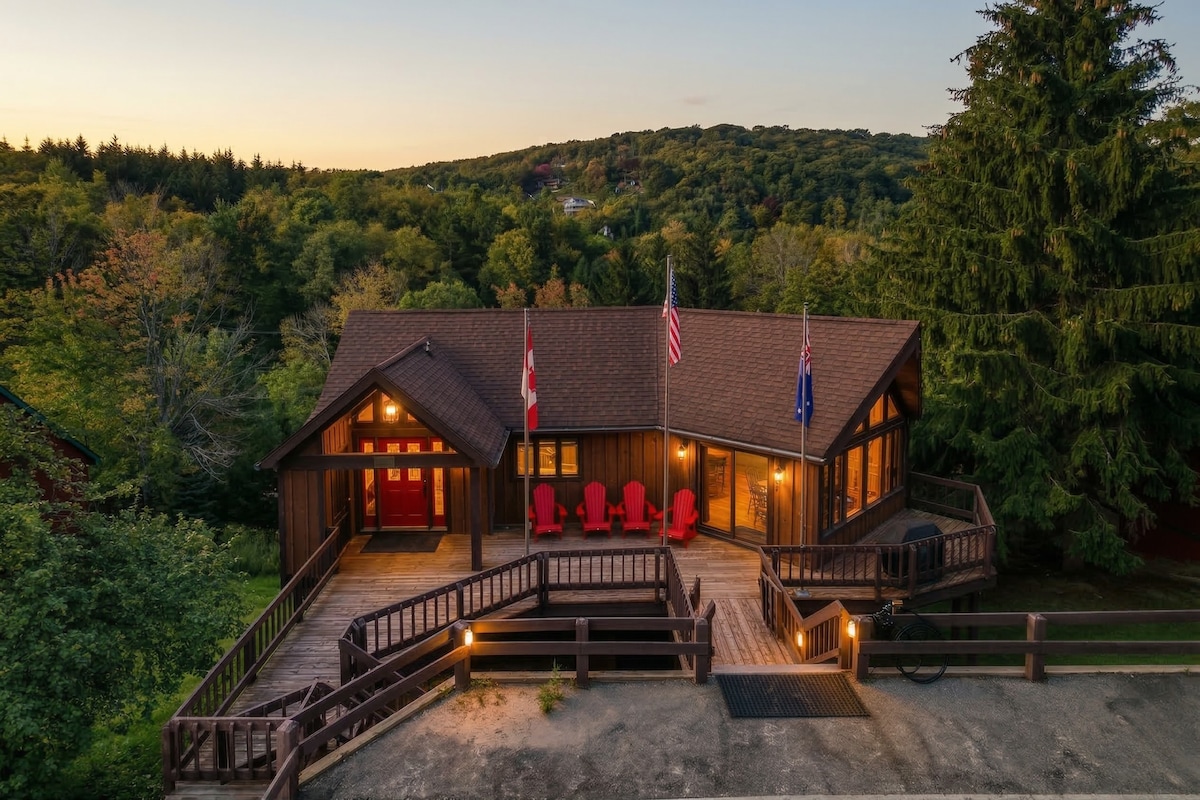
Ellicottville, New York
4BR Chalet on Holimont: Views-Hot Tub-Home Theater
Personally owned and managed by us
4.89 (218 reviews)
View listingWhy this market
New York State identifies Hemlock Lake as lying in Livingston and Ontario Counties, within the Towns of Livonia and Canadice. The State describes shorelines that are virtually undeveloped. The 6,849-acre Hemlock-Canadice State Forest surrounds Hemlock and Canadice Lakes, a drinking-water source for Rochester and adjacent communities for more than a century. This setting makes it important to distinguish public places and rules from a home’s features, access, and amenities.
The State Forest has approximately 14 miles of marked hiking trails, and boating, paddling, and fishing are allowed in most locations subject to special watershed rules. At the north end, Livonia’s Hemlock Lake Park has picnic facilities, a gazebo, a children’s play area, and fishing; the Town says there is no swimming and no dogs in the water. Public facilities do not establish a property’s access or location.
Within the State Forest, swimming, bathing, wading, water skiing, tubing, camping, and campfires or charcoal fires are prohibited. Boat-size and motor limits apply, and winter snowmobiling is limited to designated forest trails when conditions allow. A home’s arrival instructions, parking, outdoor setup, and house guidance should reflect its actual condition, separate from public-water and forest rules.
Local rules
On the Town of Canadice side, Chapter 97 defines a short-term rental as compensated lodging for not more than 31 consecutive days and requires a revocable, two-year Town permit before operation. The code addresses inspection, safety, parking, occupancy, septic, water supply, insurance, trash, contracts, posting, and advertising. A permit is not a blanket eligibility finding. Ask Code Enforcement to review the exact parcel, zoning district, approvals, septic capacity, floodplain status, and code compliance.
On the Town of Livonia side, the reviewed zoning code does not identify a specific short-term-rental chapter or parcel-specific ruling. Uses not expressly listed as permitted in a zoning district are nonpermitted. The code separately addresses an owner-occupied bed-and-breakfast; that definition and associated review are not authorization for a different lodging model. Confirm the parcel’s district and intended use with the Town & Village of Livonia Building & Zoning Department.
County and state questions also depend on the physical parcel. Livingston County says its 3% guest-room occupancy tax applies to short-term or vacation rentals and requires operator registration and quarterly filing, including when a marketplace collects or remits tax. Ontario County has a separate 3% room-occupancy-tax framework, and New York State has short-term-rental sales-tax guidance. Confirm current registration, filing, exemption, collection, and rate questions with the relevant county and state tax authorities before accepting bookings.
Review Town of Canadice Building & Zoning informationWhat we handle
Once an owner has sought property-specific direction on the intended use, we can discuss hospitality work for an organized stay. Scope begins with the home and the owner’s preferred role, not a destination-wide assumption.
Clear guest information, readiness between stays, and the home’s real condition guide the process. Municipal, tax, safety, and site determinations remain with the appropriate authorities.
Co-hosting explained
Co-hosting can let an owner retain selected decisions while an operating partner supports agreed work. Scope can include listing administration, guest communication, turnover coordination, property checks, maintenance follow-up, and reporting. Define responsibilities before guests rely on them.
Scope depends on the home and the owner’s involvement. We consider setup, access, service contacts, systems, care needs, and approvals the owner intends to retain. This can clarify whether limited support, a launch plan, or ongoing coordination is practical and identify what needs verification.
For a Hemlock Lake inquiry, hospitality planning remains separate from municipal and property-specific confirmation. The owner should work with the applicable town, county, state agencies, and other relevant authorities on the proposed use and required steps. The discussion can then focus on accurate guest information, readiness between stays, communication standards, and verified characteristics.
Nearby homes
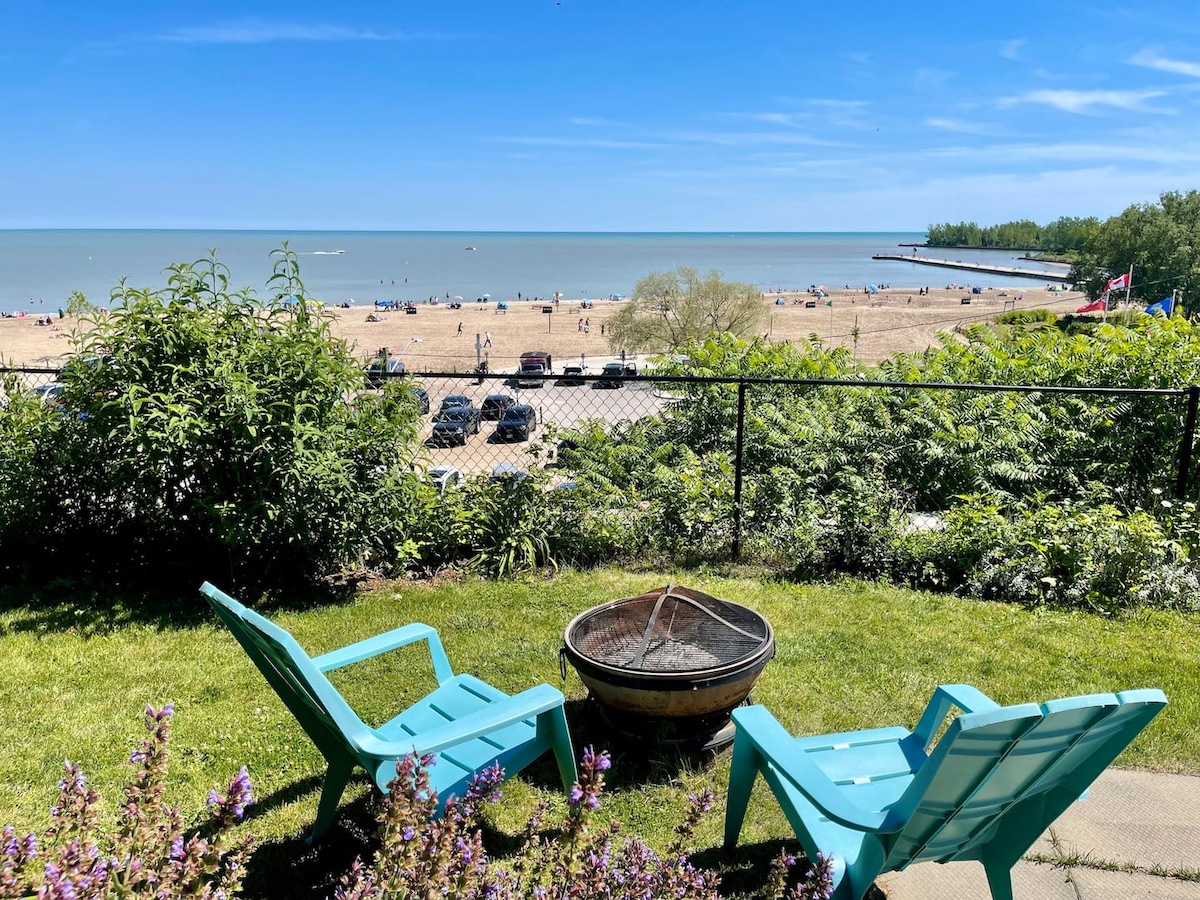
The homes below retain their actual property-record towns: Ellicottville, New York, and Port Burwell, Canada. Their cards do not determine any other property’s location, condition, approvals, or operating readiness.
Local questions
No. Hemlock Lake lies in the Towns of Livonia and Canadice, in different counties. Municipal rules, the county tax process, and parcel conditions depend on where the property sits. Confirm the tax-map parcel, town boundary, zoning district, and proposed use with the relevant local office.
Canadice Chapter 97 requires a Town permit before operating compensated lodging of 31 or fewer consecutive days. The permit is revocable, valid for two years, and subject to inspection and operating requirements. Use the Town’s current application and checklist and seek parcel-specific direction from Code Enforcement.
No. Livonia’s code separately defines an owner-occupied bed-and-breakfast, and the reviewed code does not provide parcel-specific short-term-rental authorization. Because unlisted uses are nonpermitted, ask the Building & Zoning Department how the proposed use is classified for the exact parcel.
First confirm the county in which the unit is located. Livingston and Ontario Counties publish different occupancy-tax materials, and New York State supplies short-term-rental sales-tax guidance. Confirm current registration, return, exemption, collection, and rate positions with county and state tax authorities rather than relying on a marketplace’s collection practice.
Owner inquiry
Tell us about the property, its setup, and the operating support you are considering. We begin with the home and the owner’s goals, while recognizing that municipal boundary, zoning, proposed-use, safety, tax, water, septic, floodplain, and other site questions require property-specific confirmation from the appropriate authorities. An early conversation can identify what is ready for coordination, what needs verification, and which responsibilities are practical to discuss.
Regional context
Niagara is our home base, and we also consider select management and investment opportunities elsewhere. Our Niagara hub explains the local markets we currently focus on in Ontario.